Why Some Civil War Soldiers Glowed in The Dark

Matt Soniak for mental_floss:

Why Some Civil War Soldiers Glowed in the Dark

By the spring of 1862, a year into the American Civil War, Major General Ulysses S. Grant had pushed deep into Confederate territory along the Tennessee River. In early April, he was camped at Pittsburg Landing, near Shiloh, Tennessee, waiting for Maj. Gen. Don Carlos Buell’s army to meet up with him.

On the morning of April 6, Confederate troops based out of nearby Corinth, Mississippi, launched a surprise offensive against Grant’s troops, hoping to defeat them before the second army arrived. Grant’s men, augmented by the first arrivals from the Ohio, managed to hold some ground, though, and establish a battle line anchored with artillery. Fighting continued until after dark, and by the next morning, the full force of the Ohio had arrived and the Union outnumbered the Confederates by more than 10,000.

The Union troops began forcing the Confederates back, and while a counterattack stopped their advance it did not break their line. Eventually, the Southern commanders realized they could not win and fell back to Corinth until another offensive in August (for a more detailed explanation of the battle, see this animated history).

All told, the fighting at the Battle of Shiloh left more than 16,000 soldiers wounded and more 3,000 dead, and neither federal or Confederate medics were prepared for the carnage.

The bullet and bayonet wounds were bad enough on their own, but soldiers of the era were also prone to infections. Wounds contaminated by shrapnel or dirt became warm, moist refuges for bacteria, which could feast on a buffet of damaged tissue. After months marching and eating field rations on the battlefront, many soldiers’ immune systems were weakened and couldn’t fight off infection on their own. Even the army doctors couldn’t do much; microorganisms weren’t well understood and the germ theory of disease and antibiotics were still a few years away. Many soldiers died from infections that modern medicine would be able to nip in the bud.

A BRIGHT SPOT

Some of the Shiloh soldiers sat in the mud for two rainy days and nights waiting for the medics to get around to them. As dusk fell the first night, some of them noticed something very strange: their wounds were glowing, casting a faint light into the darkness of the battlefield. Even stranger, when the troops were eventually moved to field hospitals, those whose wounds glowed had a better survival rate and had their wounds heal more quickly and cleanly than their unilluminated brothers-in-arms. The seemingly protective effect of the mysterious light earned it the nickname “Angel’s Glow.”

In 2001, almost one hundred and forty years after the battle, seventeen-year-old Bill Martin was visiting the Shiloh battlefield with his family. When he heard about the glowing wounds, he asked his mom – a microbiologist at the USDA Agricultural Research Service who had studied luminescent bacteria that lived in soil – about it.

“So you know, he comes home and, ‘Mom, you’re working with a glowing bacteria. Could that have caused the glowing wounds?’” Martin told Science Netlinks. “And so, being a scientist, of course I said, ‘Well, you can do an experiment to find out.’”

And that’s just what Bill did.

He and his friend, Jon Curtis, did some research on both the bacteria and the conditions during the Battle of Shiloh. They learned that Photorhabdus luminescens, the bacteria that Bill’s mom studied and the one he thought might have something to do with the glowing wounds, live in the guts of parasitic worms called nematodes, and the two share a strange lifecycle. Nematodes hunt down insect larvae in the soil or on plant surfaces, burrow into their bodies, and take up residence in their blood vessels. There, they puke up the P. luminescensbacteria living inside them. Upon their release, the bacteria, which are bioluminescent and glow a soft blue, begin producing a number of chemicals that kill the insect host and suppress and kill all the other microorganisms already inside it. This leaves P. luminescens and their nematode partner to feed, grow and multiply without interruptions.

As the worms and the bacteria eat and eat and the insect corpse is more or less hollowed out, the nematode eats the bacteria. This isn’t a double cross, but part of the move to greener pastures. The bacteria re-colonize the nematode’s guts so they can hitch a ride as it bursts forth from the corpse in search of a new host.

The next meal shouldn’t be hard to find either, since P. luminescens already sent them an invitation to the party. Just before they got got back in their nematode taxi, P. luminescenswere at critical mass in the insect corpse, and scientists think that that many glowing bacteria attract other insects to the body and make the nematode’s transition to a new host much easier.

A GOOD LIGHT

Looking at historical records of the battle, Bill and Jon figured out that the weather and soil conditions were right for both P. luminescens and their nematode partners. Their lab experiments with the bacteria, however, showed that they couldn’t live at human body temperature, making the soldiers’ wounds an inhospitable environment. Then they realized what some country music fans already knew: Tennessee in the spring is green and cool. Nighttime temperatures in early April would have been low enough for the soldiers who were out there in the rain for two days to get hypothermia, lowering their body temperature and giving P. luminescens a good home.

Based on the evidence for P. luminescens’s presence at Shiloh and the reports of the strange glow, the boys concluded that the bacteria, along with the nematodes, got into the soldiers’ wounds from the soil. This not only turned their wounds into night lights, but may have saved their lives. The chemical cocktail that P. luminescens uses to clear out its competition probably helped kill off other pathogens that might have infected the soldiers’ wounds. Since neither P. luminescens nor its associated nematode species are very infectious to humans, they would have soon been cleaned out by the immune system themselves (which is not to say you should be self-medicating with bacteria; P. luminescens infections can occur, and can result in some nasty ulcers). The soldiers shouldn’t have been thanking the angels so much as the microorganisms.

As for Bill and Jon, their study earned them first place in team competition at the 2001 Intel International Science and Engineering Fair.

Civil War Symposium -Huntsville- April 30

Civil War Symposium – Tennessee Valley Civil War Roundtable

 Four Bloody Years of War: Policy and Strategy, Sedition and Emancipation

April 30 2016

9:15 am – 4:30 pm Springhill Suites by Marriott- 745 Constellation Place Dr. SW Huntsville, Alabama 35801

Advanced registration required by April 15th

$30.00 members $40 general audience    students 16 and younger free (with adult)

Steve Woodworth – Keynote- Conspiracy to Assassinate President Lincoln

Greg Briggs – Featured Speaker- Laying the Blueprint- SHerman’s Logistics in the Atlanta Campaign

Peggy Allen Towns- From Slavery, to Soldering, to Self-Sufficiency

Interactive Panel Discussion

Lunch on your own


Genealogy Expo – Free-March 12th-Hartwell, Ga.

Genealogy Expo- sponsored by the  Savannah River Valley Genealogical Society, Hartwell, Georgia – Saturday March 12 2016 -Hart County Adult Learning Center next to the Hart County Library- 150 Benson St. Hartwell, Ga.  -10:00 am- 2:00 pm –

 11:30- Guest Speaker Presentation- Our speaker will be Becky Sherman from the Georgia Archives and will be speaking on the holdings and what is available at the Georgia Archives.

Groups or individuals may have tale space to share information.

Visit http://www.srvg.org or http://www.srvgs.wordpress.com or visit our facebook page.

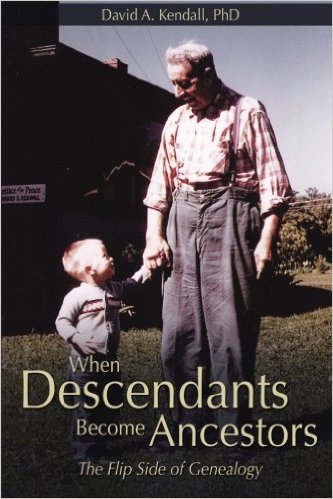
When Descendants become Ancestors: The Flip Side of Genealogy

Carroll County Genealogical Society Spring Workshop

April 2 1016  – 9:00 am to 12:00 pm – Carroll County Veterans Building -1790 Stripling Chapel Rd – Carrollton, Ga.

When Descendant Become Ancestors: The Flip Side of Genealogy

Dr. David Kendell, author, professional counselor and retired professor, will present a program based on his book with the concept of looking forward to what we can provide for our descendants, rather than backward to what we did not get from our ancestors.

GIG_CCGS_Spring2016

Check -in 8:30 -9:00. No charge for this workshop.  Pre-registration ( name address, phone number or email address) is encouraged. Send to ccgsga76@gmail.com or call Bill Maddox at 770-832-6442 prior to April 1.  It is recommended to read the book prior to the workshop, if possible. A copy is available in the Special Collections area of the Neva Lomason Library in Carrollton or can be ordered from Amazon.

An Excerpt from When Descendants Become Ancestors:

“Congratulations-you’re going to be an ancestor (someday). You cannot escape it. Nor can I. Nor can anyone else. That’s not necessarily a bad thing, depending on your beliefs about an afterlife, but each body ultimately ceases to exist. We all know that. From the moment of birth, each of us begins a journey that must ultimately conclude with our entrance into ancestry. As we research our own ancestors and mourn the lack of information available to us, we forget that we are the future ancestors of our descendants. And if we don’t leave to them the kinds of information about our lives that we crave to know about our own forefathers, then we are merely perpetuating the problem” How often have you regretted your failure to engage the elder generations of your family for information about their lives and memories? How many times have you wanted just one more hour with a deceased relative who could answer that one burning question that you suddenly thought about, and that no one else can answer? Perhaps you remember a time when an older acquaintance wanted to share with you some stories about “the good old days” but you couldn’t be bothered. Most of us have had regrets like these, as will our descendants-unless we seek to record and preserve some stories for their use. Whether our stories are short and simple or long and complex matters not, but these stories will become part of their heritage and can certainly influence their lives. Though our contributions may not be recognized for decades, our lives matter to future generations and our stories should be told. The rest is up to each of us.

Amazon.com

A Legendary Southern Wedding-Daily Shot

Daily Shot- The Garden & Gun Blog – CJ Lotz- 12 Feb 2015

The sun rose clear and beautiful from the hills that surrounded Biltmore; All the world seemed happy on that day,” began “The First Bride of Biltmore,” a poem dedicated to the heiress Cornelia Vanderbilt on her wedding day.

It’s only fitting that a recreation of Cornelia’s gown is among the forty-plus wedding costumes on display at  “Fashionable Romance: Wedding Gowns in Film,” a new exhibition at the Biltmore Estate in Asheville, North Carolina, which just opened. The exhibit includes outfits worn by Emma Thompson, Hugh Grant, Kate Winslet, and Alan Rickman in Sense and Sensibility, costumes from Pride and Prejudice and Emma, and countless heirlooms from the Vanderbilt family weddings themselves.

READ MORE HERE

Reminder- Elyse Hill- GSCC- 23 FEb 7:00

Genealogy Society of Cobb County Georgia Monthly Meeting

Time: Tuesday, February 23, 2016, 7:00 PM8:00 PM

Place: First Presbyterian Church of Marietta, 189 Church Street, Marietta, Georgia 30060

Program: For the February meeting of the Genealogy Society of Cobb County, Elyse Hill, a professional researcher for over 10 years, will present on African-American Studies. She is the Corresponding Secretary and the Program Chair of the Metro Atlanta Chapter of the Afro-American Historical and Genealogical Society (AAHGS) that provides a local forum for family-tree researchers by sharing historical and genealogical information, methodology, and sources about African Americans with roots not just in Georgia, but in all states and nations. Ms. Hill is a guest writer for the AAHGS National newsletter and one of the first place winners of the 2015 International Society of Family History Writers and Editors Excellence in Writing Competition (ISFHWE).
A 2012 graduate of Samford University’s Institute of Genealogy & Historical Research, Ms. Hill completed the Researching African-American Ancestors course. She is currently researching and conducting case study projects to include: Free Persons of Color in Georgia before Emancipation; African-American Civil War Union Sailors; and African-American Immune Nurses during the Spanish American War.

Website:http://www.cobbgagensoc.org/

Coweta Libraries- Dr. D.L. Henderson- 27 Feb.

Genealogy: Explore your roots at Coweta libraries

The Newnan Time- Herald

5 Feb. 2016

Coweta Public Library System’s Central Library branch is hosting three genealogically inspired programs this month in celebration of African-American History Month.

They focus on historical storytelling, slave genealogical research, and church histories.

The first will be held on Saturday at 11 a.m. Genealogist Janice Sikes-Rogers will present “Creative Expressions: African American Memories.” Sikes-Rogers, who is also an historian and poet, will share family history research, storytelling, and poetry from her book “Southern by Nature.”

The second program is “Explore Your Roots: Evaluating Genealogical Evidence of Enslaved Ancestors,” on Feb. 23 at 6:30 p.m. This seminar will be presented by Dr. D. L. Anderson, cemetery historian and genealogist, and past president of the Afro-American Historical and Genealogical Society. She has been recognized by the Atlanta City Council for her contribution to the preservation and interpretation of African American history and culture, and is currently working on a book, “Dignity in Death: A Story of Atlanta’s South-View Cemetery.” Dr. D.L. Anderson will lead participants through a case study in order to introduce them to strategies for genealogical research on enslaved ancestors.

The third program will be held on Feb. 27 at 10 a.m. It is titled “Hallowed Grounds: Preserving Your Church History” and will teach participants basic principles of setting up and maintaining church archives.

Call the Central Library at 770-683-2052 to register for any of these programs.

CPLS programs are always free and open to the public.

Cobb- Preservation of Photos & Papers-2 March

The staff of the Georgia Room at the Cobb County Switzer Library, 266 Roswell Street, Marietta. GA invites everyone to join them on the first Wednesday of each month and they will help you in tracking down family history facts.

The topic for March is Preservation of Photos and Papers.

2 March 7:00-8:00 pm – Light refreshments to follow=-

For more information Cobb County Public Library System

Pchtree City – Crafting your personal tale- 4 March

Southern Crescent Storytellers meet 4 March 2016 at Starbucks near Stein Mart on Hwy 54 in Peachtree City- 1 pm – 2:30 pm.

“How to Craft Personal Tales” is the first in a series of quarterly classes.

Friends and supporters of storytelling are invited to attend. No fee – donations welcome

For more information anne50w(AT)aol.com